Complete Wading Birds List: 25+ Species Found in the US
A comprehensive wading birds list is essential for birdwatchers across the United States. These remarkable water birds inhabit wetlands, marshes, and coastal areas throughout America, with over 30 species regularly observed. From the iconic Great Blue Heron to the vibrant Roseate Spoonbill, wading birds represent some of our most spectacular avian wildlife, playing crucial roles in aquatic ecosystems.
What Are Wading Birds and Their Characteristics
Wading birds are long-legged aquatic species that hunt for food while standing or walking slowly through shallow water. These water birds possess specialized adaptations including elongated bills, necks, and legs that enable them to efficiently capture fish, amphibians, and invertebrates. Most wading birds belong to families such as Ardeidae (herons and egrets), Threskiornithidae (ibises and spoonbills), and Ciconiidae (storks).
The United States hosts an impressive diversity of wading birds usa species, with populations concentrated in wetland-rich regions like the Everglades, Gulf Coast, and Pacific Northwest. These birds exhibit remarkable hunting strategies, from the patient stalking of herons to the distinctive sweeping motions of spoonbills filtering water for prey.
Large Wading Birds of North America
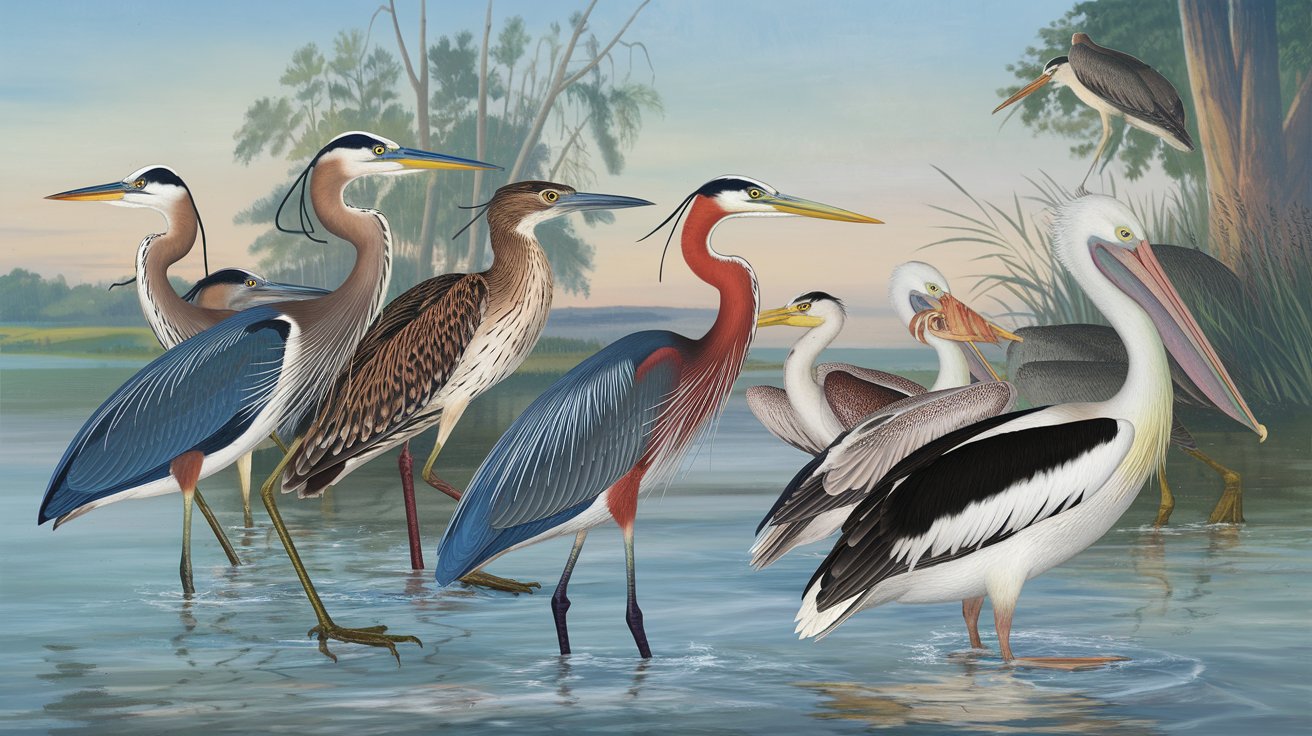
The most recognizable wading birds in the United States include several large species that dominate wetland environments. These impressive birds showcase the diversity found in any comprehensive wading birds list.
Great Blue Heron
The Great Blue Heron stands as North America’s largest heron, measuring up to 54 inches tall with a wingspan reaching 72 inches. These magnificent birds inhabit freshwater and saltwater environments across all 50 states, with populations remaining stable at approximately 83,000 breeding pairs as of 2024 surveys. Their distinctive blue-gray plumage and patient hunting style make them easily identifiable among water birds.
Great Egret
Once nearly extinct due to plume hunting, the Great Egret has made a remarkable recovery and now thrives across American wetlands. These pure white wading birds measure 39 inches in height and display striking black legs with yellow bills during breeding season. Current populations exceed 140,000 breeding pairs, representing one of conservation’s greatest success stories among types of wading birds.
Medium-Sized Wading Birds Species
Mid-sized species represent a significant portion of any wading birds list, offering excellent opportunities for birdwatchers to observe diverse hunting behaviors and habitat preferences across American wetlands.
Tricolored Heron
The Tricolored Heron displays distinctive white belly stripes contrasting with blue-gray and rusty plumage. These agile wading birds prefer coastal marshes and inland wetlands across the southeastern United States, with breeding populations concentrated in Louisiana, Florida, and Texas. Their active hunting style distinguishes them from other heron species, as they frequently run through shallow water pursuing prey.
Snowy Egret
Snowy Egrets showcase brilliant white plumage with distinctive black bills and legs, complemented by bright yellow feet earning them the nickname ‘golden slippers.’ These water birds exhibit remarkable hunting versatility, employing techniques from patient stalking to energetic stirring of sediment. Breeding populations across the United States have stabilized around 95,000 pairs, with significant concentrations in California’s Central Valley and Florida’s wetlands.
Colorful Wading Birds: Ibises and Spoonbills
Among the most spectacular entries in any wading birds list, ibises and spoonbills add vibrant colors to American wetlands. These specialized feeders possess unique bill adaptations for their distinctive foraging strategies.
Roseate Spoonbill
The Roseate Spoonbill represents one of America’s most stunning wading birds, displaying pink plumage that intensifies during breeding season. These remarkable birds use their spatulate bills to sweep through water, filtering out small fish and crustaceans. Current breeding populations in the United States number approximately 2,500 pairs, primarily concentrated in Texas, Louisiana, and Florida coastal regions.
White Ibis
White Ibis populations have shown remarkable resilience, with over 180,000 individuals recorded across southeastern states in 2024 surveys. These curved-bill specialists probe soft substrates for invertebrates, crustaceans, and small fish. Their distinctive pink facial skin and legs become more vibrant during breeding season, making them highly recognizable among types of water birds in their range.
Shore-Dwelling Wading Birds
Coastal and shoreline environments support numerous specialized wading birds adapted to marine conditions. These species form an essential component of comprehensive wading birds usa identification guides.
American Avocet
The American Avocet showcases distinctive upturned bills and striking black-and-white wing patterns. These elegant wading birds inhabit shallow alkaline lakes and ponds across western North America, with breeding populations concentrated in the Great Basin and Prairie Pothole regions. Their unique feeding behavior involves sweeping their specialized bills side-to-side through water to capture small invertebrates and crustaceans.
Black-necked Stilt
Black-necked Stilts possess the longest legs relative to body size among North American wading birds, enabling them to wade in deeper waters than most species. These striking black-and-white birds inhabit shallow wetlands, salt ponds, and mudflats across the western and southern United States. Breeding populations have expanded northward in recent decades, with approximately 65,000 pairs recorded in 2024 continental surveys.
Small Wading Birds and Shorebirds
Smaller species complete the diversity found in any comprehensive wading birds list, though some technically classify as shorebirds, they exhibit similar wading behaviors and habitat preferences as traditional wading species.
Least Sandpiper
While technically a shorebird, Least Sandpipers frequently wade in shallow waters alongside traditional wading birds. These tiny migrants measure only 6 inches in length but undertake remarkable journeys between Arctic breeding grounds and southern wintering areas. Their yellowish legs distinguish them from other small sandpipers, and they commonly forage in mudflats and shallow wetlands throughout their range.
Solitary Sandpiper
Solitary Sandpipers exhibit more heron-like hunting behavior than most shorebirds, often standing motionless before striking at prey. These water birds prefer freshwater environments including woodland ponds, streams, and marsh edges. Their distinctive white eye-ring and spotted plumage make them easily identifiable among mixed flocks of small wading species.
Regional Distribution of Wading Birds Across the United States
Understanding regional distributions helps birdwatchers target specific areas for observing different types of wading birds. Each region of the United States supports distinct assemblages based on habitat availability and climate conditions.
The southeastern states, particularly Florida, Louisiana, and Texas, host the greatest diversity of wading birds usa species. The Everglades alone supports breeding populations of 13 wading bird species, while the Gulf Coast provides crucial wintering habitat for northern migrants. Western states feature different assemblages, with Great Basin wetlands supporting specialized species like American Avocets and Black-necked Stilts.
Identifying Wading Birds: Key Field Marks and Behaviors
Successful identification of wading birds requires attention to size, bill shape, leg color, and hunting behavior. A comprehensive wading birds list should include these distinguishing characteristics to aid field identification.
Bill morphology provides the most reliable identification feature, ranging from the dagger-like bills of herons to the spatulate bills of spoonbills and curved bills of ibises. Leg color varies dramatically among species, from the bright yellow feet of Snowy Egrets to the pink legs of flamingos. Behavioral differences, such as the patient stalking of herons versus the active stirring of some egret species, offer additional identification clues for water birds enthusiasts.
Conservation Status and Population Trends
Current conservation efforts have stabilized most wading birds populations across the United States, though several species remain of conservation concern. Climate change and habitat loss continue to impact breeding success and distribution patterns of these water birds.
The North American Bird Conservation Initiative identifies several wading bird species as priorities for conservation action. Wood Storks remain federally listed as threatened, while Saltmarsh Sparrows face severe population declines due to sea-level rise. Successful recovery programs for species like Great Egrets demonstrate the effectiveness of targeted conservation efforts for wading birds usa populations.
Best Locations for Observing Wading Birds
Premier wading birds viewing destinations across the United States offer opportunities to observe multiple species in optimal habitats. These locations consistently provide excellent birding experiences for both beginners and experienced observers.
Everglades National Park leads all destinations with 13 resident wading bird species, while Bosque del Apache National Wildlife Refuge in New Mexico hosts spectacular winter concentrations. Coastal locations like Cape May, New Jersey, and Point Pelee, Ontario, provide excellent migration viewing, while western sites like Bear River Migratory Bird Refuge support unique assemblages of water birds adapted to alkaline conditions.
Related video about wading birds list
This video complements the article information with a practical visual demonstration.
Questions & Answers
What are the most common wading birds in the US?
The most common wading birds in the United States include Great Blue Heron, Great Egret, Snowy Egret, and Tricolored Heron. These species maintain stable populations exceeding 80,000 breeding pairs each and can be found in suitable wetland habitats across multiple states, with Great Blue Herons being the most widespread, occurring in all 50 states.
What is a wading bird that starts with B?
Black-necked Stilt is a prominent wading bird that starts with B, featuring distinctive long pink legs and black-and-white plumage. Other B-named wading birds include Black-crowned Night-Heron, found throughout North America, and Buff-breasted Sandpiper, though the latter is more commonly classified as a shorebird despite exhibiting wading behaviors.
What are the key differences between herons and egrets?
Herons and egrets belong to the same family (Ardeidae) but differ primarily in plumage color and size. Egrets are typically smaller with pure white plumage, while herons display more varied coloration including blue-gray, brown, and black patterns. Both groups share similar hunting behaviors and habitat preferences, though egrets often exhibit more active foraging strategies.
Which wading birds are 5 letters long in name?
Several wading birds have 5-letter names including Crane (Sandhill Crane), Stork (Wood Stork), and Heron (though most heron species have longer compound names). Egret also contains 5 letters and represents multiple species. These shorter names often refer to entire bird families rather than specific species.
What threats do wading birds face in 2024?
Major threats to wading birds in 2024 include habitat loss from coastal development, water level changes due to climate change, and pollution in wetland environments. Sea-level rise particularly impacts coastal nesting colonies, while drought conditions affect inland breeding success. Urban expansion continues to eliminate crucial wetland habitats across the United States.
When is the best time to observe wading birds?
The optimal time for observing wading birds is during early morning hours (6-10 AM) and late afternoon (4-6 PM) when these birds are most active in feeding. Spring migration (March-May) and fall migration (August-October) provide peak diversity, while breeding season (April-July) offers opportunities to observe plumage changes and courtship behaviors in resident populations.
| Bird Family | Key Species | Identification Features |
|---|---|---|
| Herons (Ardeidae) | Great Blue Heron, Great Egret | Long necks, dagger-like bills, patient hunting |
| Ibises (Threskiornithidae) | White Ibis, Glossy Ibis | Curved bills, probe feeding behavior |
| Stilts (Recurvirostridae) | Black-necked Stilt, American Avocet | Extremely long legs, shallow water preference |
| Spoonbills (Threskiornithidae) | Roseate Spoonbill | Spatulate bills, sweeping feeding motion |